Off-site Construction
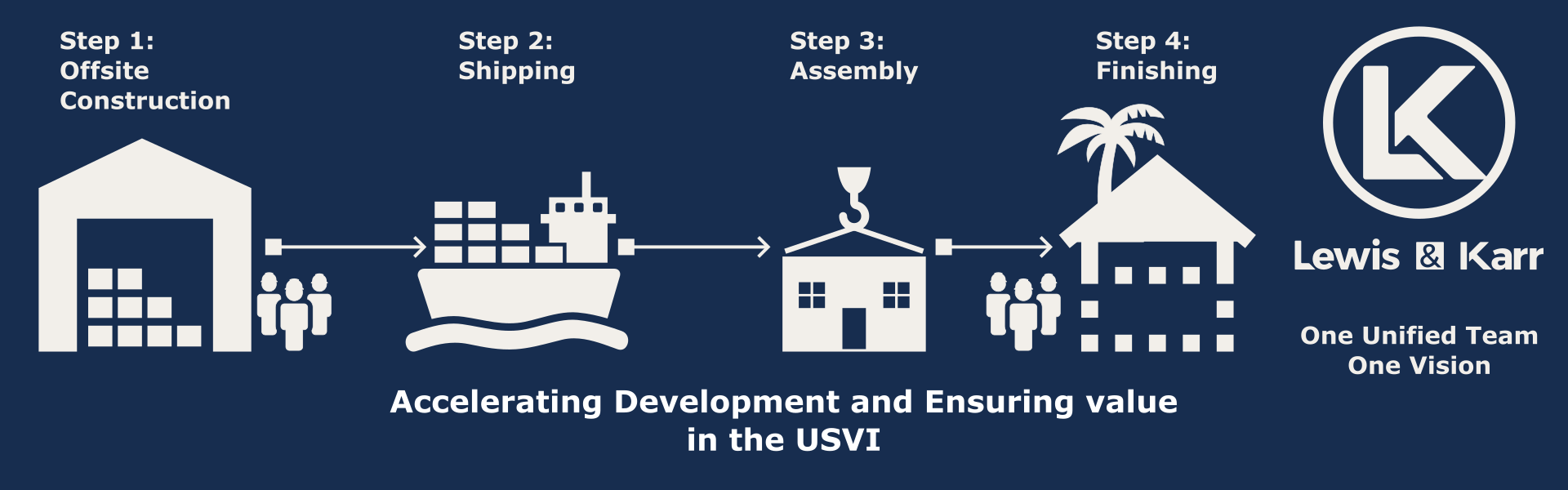
Off-site Construction
Assembly
Finished Interior
What is Off-site Construction?
Off-site construction is the process of building structural components in a factory controlled setting, then transporting and assembling them on site. This approach reduces weather delays, improves quality control, and speeds delivery by moving much of the work indoors and into a standardized production line.
By combining design, manufacturing, and on-site assembly, off-site construction delivers complete building sections ready for installation. It is particularly effective for repeatable building elements, precise designs and manufacturing, complex mechanical systems, and high-quality finishes created under stable factory conditions.
How It Works
1. Planning and design: Detailed digital models and engineering plans are created so units fit together precisely.
2. Factory production: Structural panels, walls, floors, and services are assembled in a controlled facility where quality and safety are easier to manage.
3. Shipping and staging: Finished units are protected, transported, and staged near the installation site.
4. On-site assembly: Units are lifted into place, connected, and finished quickly with minimal disruption.
Why the USVI Benefits
Off-site construction can transform project delivery in the US Virgin Islands by reducing on-island labor demands, minimizing exposure to hurricanes and tropical weather, strong and precise steel construction, and lowering the overall construction timeline. Units built off-island arrive ready to assemble, which helps control costs and preserve local infrastructure.
This method also supports sustainable development by reducing waste, improving material efficiency, and allowing more predictable scheduling around seasonal weather patterns. For island communities, it provides a faster, safer route to new housing, commercial buildings, and community facilities.